English
 Français
 عربى
Home / News / Industry News / Why Polyester-Rayon Blend (TR) Formal Wear Fabric Outperforms Wool for Bulk Buyers
Industry News

Content
Quick takeaway: a well-specified blend gives formal garments a tailored appearance, practical care and a cost structure that scales well for volume programs.
Buyers who source tailored jackets, trousers, skirts or staff uniforms face a familiar trade-off. Pure wool offers a rich hand and natural drape, but it carries a high price, creases easily and often needs professional care. Pure polyester is durable and inexpensive, yet it can feel stiff, trap heat and look flat after repeated wear. A polyester-rayon blend (TR) formal wear fabric sits between these extremes. It combines the shape retention of a synthetic fiber with the soft, fluid handle of a regenerated cellulose fiber, which is why it has become one of the most practical choices for formal garments produced in volume.
This guide approaches the material from a sourcing perspective. It explains what the blend is, how its fibers interact, where it performs well, and which technical checks reduce risk before a large order is placed. It also compares the fabric with wool and pure polyester, outlines a workable process for requesting quotations and samples, and answers the questions buyers ask most often.
The name follows a simple convention. The letter T stands for polyester, a synthetic thermoplastic fiber, and R stands for rayon, a regenerated cellulose fiber produced from wood pulp. In trade documents, TR refers to the blend, and the ratio is normally expressed as a pair of percentages. The most widely used commercial version is 65 percent polyester and 35 percent rayon, often labeled TR 65/35. Ratios such as 80/20 or 50/50 appear in specialized programs, but 65/35 has become the reference point because it balances cost, appearance and performance.
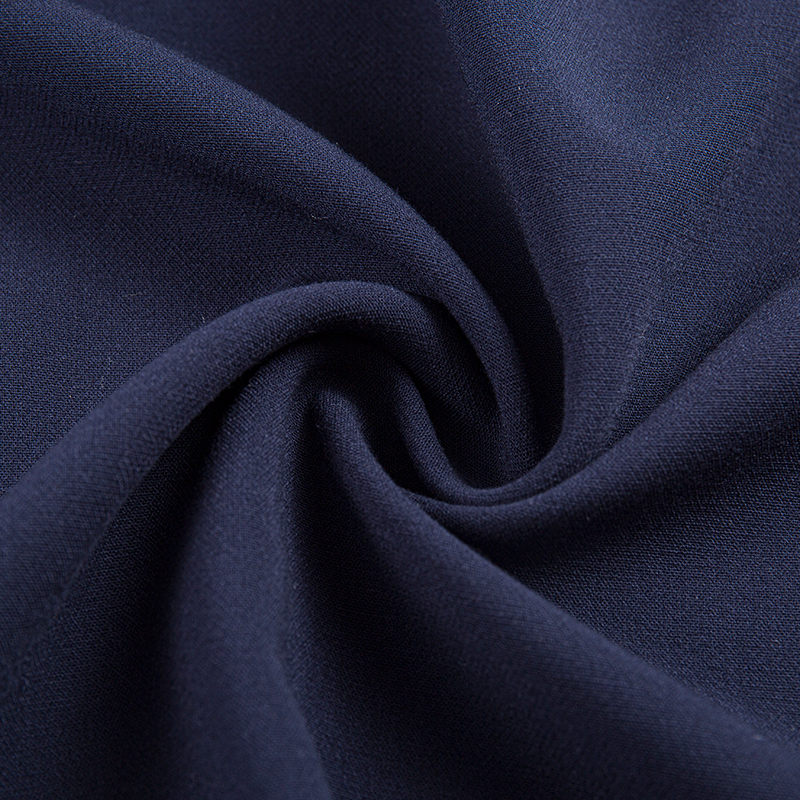
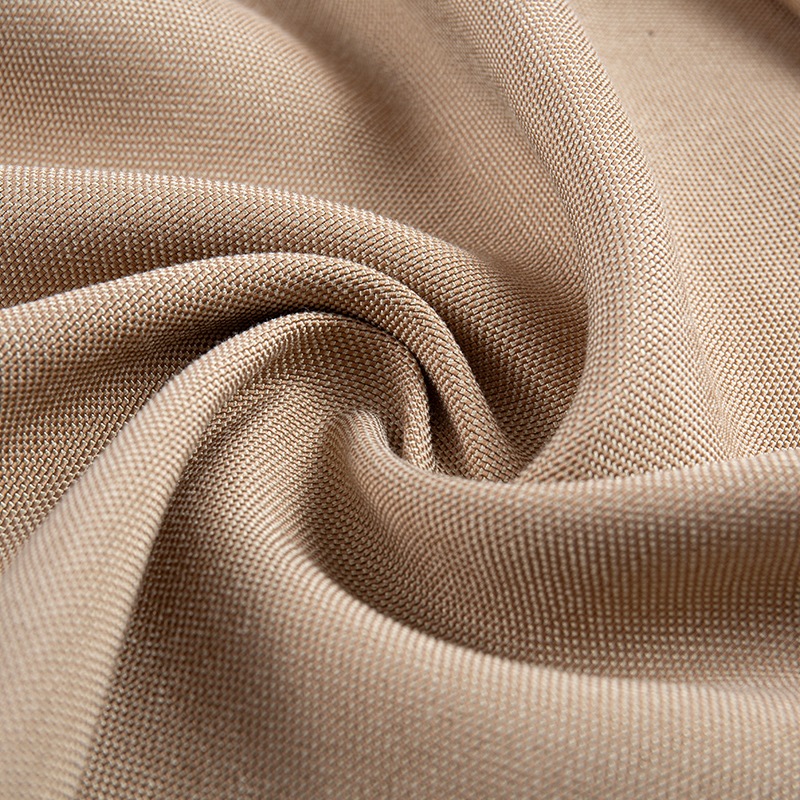
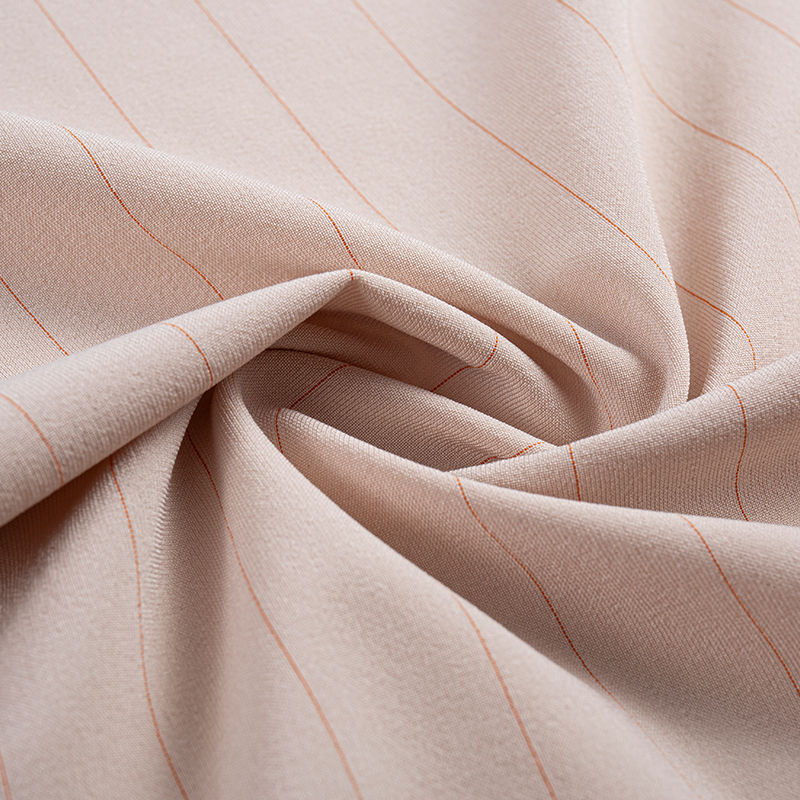
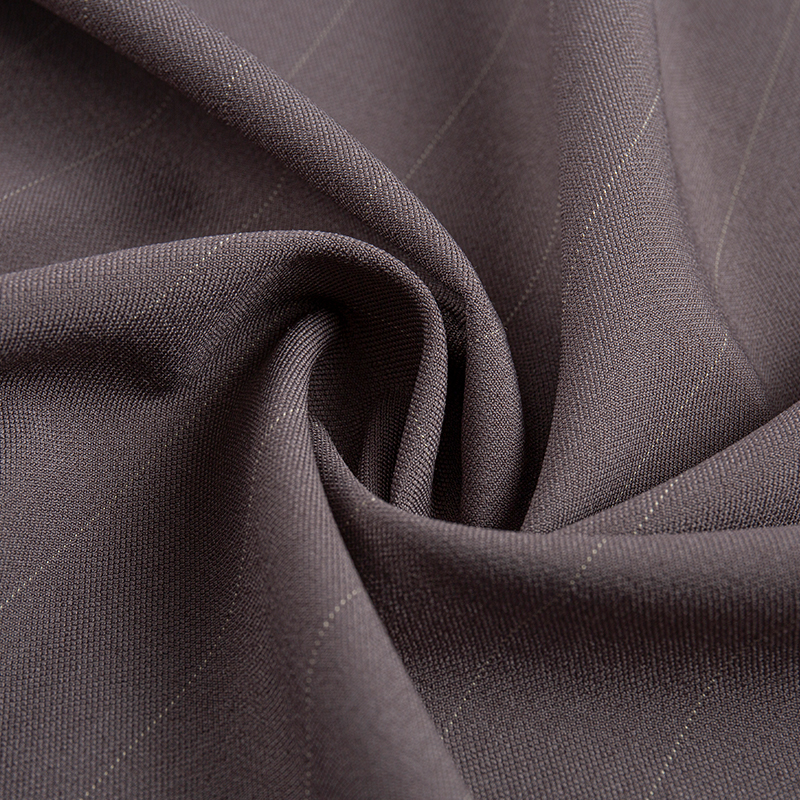
Because the term describes a fiber mix rather than a single construction, the blend can be woven in several ways. The structures most often used for formal garments include the following.
For most tailored programs, a twill-based TR suiting fabric is the usual starting point, while slub and double-layer constructions serve more specialized design directions.
The blend works because each fiber covers a weakness of the other. Polyester is hydrophobic and has very low moisture regain, roughly 0.4 percent under standard conditions, so it resists stretching and recovers its shape quickly. Rayon absorbs far more moisture, often between 11 and 13 percent, which gives the cloth a softer touch, better breathability and a fluid drape that imitates the behavior of wool.
Polyester in the majority provides structure, abrasion resistance and dimensional stability through wear and laundering. The rayon share, at roughly one third, is enough to lift the handle and soften the surface without making the cloth vulnerable to creasing. Moving toward more rayon improves softness but usually reduces wrinkle recovery and increases shrinkage risk, while moving toward more polyester increases durability at the expense of comfort.
The same fiber mix can perform very differently depending on how the yarn is spun and finished. Compact spinning produces smoother surfaces with fewer protruding fibers, which helps reduce pilling. Heat setting stabilizes the polyester component, while resin or softening treatments influence wrinkle recovery and hand feel. Buyers should therefore treat the ratio as a starting specification rather than a guarantee of performance.
Procurement decisions should rest on problems a fabric solves in production and in the field. The following benefits are the ones most frequently cited by garment manufacturers and uniform program managers.
Choosing a fabric is rarely about a single property. The table below compares the blend with two common alternatives on criteria that matter to procurement and production teams.
| Criteria | TR 65/35 blend | Pure wool | Pure polyester |
|---|---|---|---|
| Hand feel and drape | Soft, fluid, wool-like | Warm, rich, natural | Smooth but often stiff |
| Wrinkle recovery | Good to very good | Good, needs pressing care | Excellent |
| Breathability | Moderate to good | Good | Low |
| Care method | Machine washable | Often dry clean | Machine washable |
| Relative material cost | Moderate | High | Low |
| Durability in use | High | Moderate | Very high |
The blend is the most balanced option when a garment must look tailored, survive frequent laundering and remain affordable across large quantities. Pure wool suits premium, low-volume tailoring where natural fiber is a selling point. Pure polyester suits budget-driven applications where comfort is a lower priority.
Application fit determines whether a fabric will satisfy the buyer over the full product life. The blend performs particularly well in three broad categories.
Tailored jackets need a fabric that holds structure at the shoulder and lapel while still draping naturally over the body. A twill construction in a mid-weight range, typically around 220 to 260 grams per square meter, offers a practical balance for this use.
Uniforms are washed frequently and must look consistent across many sizes and wear cycles. The blend reduces ironing time and allows garments to be laundered in house, which often lowers the total cost of ownership compared with dry-cleaned alternatives.
Trousers, skirts and smart separates for public-sector and office settings benefit from the fabric's stability and easy care. Slub or plain constructions often work well here because they provide texture without visual noise.
Successful sourcing usually follows a clear sequence. Skipping stages tends to create expensive corrections later, particularly when a design moves from a approved sample to full production.
A specification should state the fiber ratio, weight in grams per square meter, weave, color reference, finish requirements and acceptable tolerance for each. Writing these details early prevents disagreements about what was approved and gives the mill a clear target.
Request samples that reflect the final finish rather than a development swatch. Sewing a short test garment and washing it several times reveals issues that a flat sample cannot show, such as seam puckering or shade change after laundering.
Mills schedule dye batches in fixed runs. Consolidating colors and sizes into fewer, larger orders usually lowers the effective cost and shortens the wait for each style.
Laboratory data provides an objective basis for comparing suppliers. Buyers should request test reports from an accredited laboratory and confirm that the results match the approved sample.
| Test | Typical target | Why it matters |
|---|---|---|
| Shrinkage after laundering | Below 3 percent | Maintains fit over time |
| Pilling resistance | Grade 3 to 4 or better | Protects surface appearance |
| Rubbing fastness | Grade 4 or higher | Prevents dye transfer to linings |
| Fabric weight | 180 to 260 gsm | Controls drape and structure |
Quotations for this fabric vary widely, and comparing numbers without context can mislead buyers. Several variables drive cost.
Buyers can often improve pricing by standardizing colors across product lines, committing to repeat orders, accepting standard finishing where custom treatment is unnecessary, and planning production windows that allow efficient scheduling. Minimum order quantities usually reflect the cost of setting up a dye batch, so combining styles into one color family can lower the effective cost per meter.
A regional hospitality group with several properties needed to replace uniforms for front-desk and management staff. The previous wool-rich garments required dry cleaning, and shape loss after repeated cleaning led to frequent replacement.
The procurement team tested three candidate fabrics across multiple laundering cycles. The TR blend retained its appearance close to the premium option, its shrinkage stayed within the target range, and its care cost dropped by about 40 percent because garments could be washed in house. The team selected a twill construction in charcoal and navy, requested a light anti-static finish, and placed a phased order to validate fit across sizes before full rollout.
The most common commercial ratio is 65 percent polyester and 35 percent rayon, often labeled TR 65/35. It offers a practical balance of structure, softness, cost and easy care.
The blend typically costs less, resists wrinkling better and can be machine washed. Wool retains a richer natural hand and is preferred for premium, low-volume tailoring where authenticity is important.
Yes. Anti-static, anti-pilling and light elastic finishes are commonly requested. Finishing choices should be confirmed in a sample stage before bulk production begins.
Include the fiber ratio, gram weight, weave, color references, finishing requirements, estimated quantity and delivery timeline. Clear details allow the supplier to provide an accurate and comparable quotation.
Lead times depend on whether a standard color is available or a new dye lot is required. Buyers should also plan time for laboratory testing and fit approval before committing to production.
For buyers who need a dependable middle ground between premium wool and budget synthetics, the blend offers strong value, provided specifications are written clearly and verified before volume production. Whether you are developing a tailored collection or a corporate uniform program, begin with clear performance targets, request samples that reflect the final finish, and evaluate fabric in real washing conditions. A short sample run of a TR formal fabric is often the most efficient way to confirm handle, fit and care before committing to a full order.