English
 Français
 عربى
Home / News / Industry News / Acetate Fabric for Clothing: Properties, Uses, Care, and Buyer Guidance
Industry News

Content
Acetate has been part of fashion for more than a century, and it still holds a distinct position in the fabric market. Produced from purified plant cellulose, this semi-synthetic filament delivers the luster and fluid drape of silk at a far more accessible cost, which explains its lasting presence in linings, eveningwear, and softly falling blouses. At the same time, acetate is often misunderstood. Some buyers prize its sheen and smooth hand, while others hesitate over heat sensitivity and care limits. The sections below take a practical, technical view of how acetate fabric is made, how it behaves in finished garments, where imitation acetate and blends extend its usefulness, and what sourcing teams should confirm before committing to a program.
Acetate belongs to the regenerated cellulosic family. Production begins with purified cellulose, most often sourced from wood pulp or cotton linters. Through acetylation, part of the cellulose is converted into cellulose acetate and dried into flakes. These flakes dissolve in a solvent to form a thick spinning solution, which is then pushed through fine spinneret holes into warm air. As the solvent evaporates, solid filaments form and are collected as yarn. Producers frequently flatten the filament cross section, and that lobed, ribbon-like shape is what catches light unevenly across the surface, creating the soft, multi-directional sheen that separates acetate from brighter, rounder synthetic filaments.
The family contains two members that behave differently in garments. Standard acetate keeps the superior silk-like luster and drape, but it is the more delicate of the pair: it tolerates little heat, prefers professional cleaning, and recovers slowly from deep wrinkles. Triacetate is more fully acetylated, which raises its heat tolerance, allows machine washing, and enables heat-set pleats that survive repeated wear. Many apparel teams therefore specify standard acetate for linings and lustrous evening fabrics, and triacetate or acetate-rich blends where pleat retention and easier care matter more. The first task in any development brief is simply to establish which member of the family a quotation refers to, because care labels, pressing standards, and cost all follow from that answer.
Four characteristics explain most of what acetate does on the body, and each one points to a concrete design decision rather than a generic opinion about whether the fiber is good or bad.
Two further limits deserve attention. Abrasion resistance is lower than that of polyester, so high-friction zones such as seat panels, cuffs, and strap contact points can develop shine or wear earlier than the rest of the garment. When acetate gets wet it also loses strength and distorts more readily, which is why washing and finishing methods must be engineered into the garment at the pattern stage instead of patched on afterwards. None of these limits disqualify the fiber. They simply define the conditions under which it performs, and experienced product teams design around them deliberately.
Treat acetate as a specialist: exceptional in sheen, drape, and depth of color for its cost, but weaker under heat, rubbing, and rough handling.
Acetate rarely competes on durability, and it does not need to. It wins on appearance per dollar, and its strongest applications follow directly from that advantage.
LiningsEveningwearBlousesPleated skirtsScarves and robesStretch dresses
Linings remain the classic application. A smooth acetate lining lets a jacket glide over a shirt, creates a clean finishing layer inside tailored pieces, and accepts deep, stable colors that can be matched precisely to the shell fabric. Eveningwear is the second stronghold: satins and crepes built on acetate fall into fluid silhouettes that budget constructions struggle to imitate, which is why the fiber keeps returning to gowns and occasion dresses season after season.
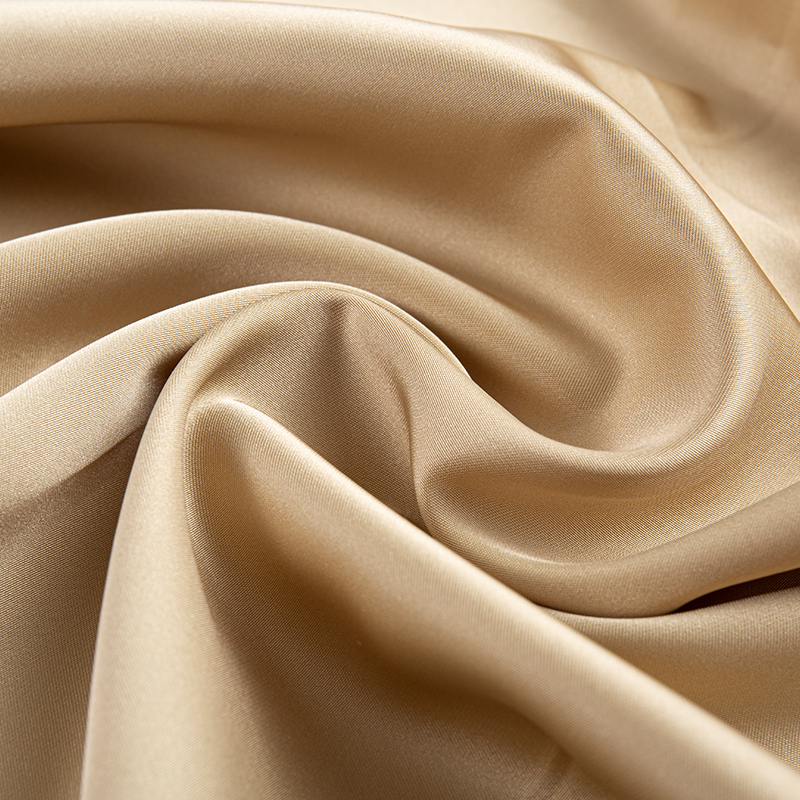
 Acetate Satin Fabric with Silk-Like LusterItem No.2765 blends 61% acetate with 39% polyester in a 58-inch, 220 GSM satin weave. Its smooth surface, fluid drape, and stable deep colors make it a natural fit for linings, eveningwear, and occasion dresses discussed here.View Product →
| Garment application | Why acetate or its blends fit |
|---|---|
| Suit and blazer linings | Smooth, low-friction hand with deep, color-stable shades |
| Evening and occasion dresses | High luster and fluid drape at an accessible cost |
| Blouses and printed tops | Bright, saturated prints on satin or crepe grounds |
| Pleated skirts and sets | Triacetate and imitation acetate hold heat-set pleats |
| Headscarves and robes | Lightweight, lustrous fabrics with vivid solid colors |
| Stretch dresses and sets | Four-way stretch constructions add comfort and recovery |
Beyond tailored interiors and evening pieces, lightweight satin and crepe grounds carry bright prints for blouses, while the family extends into seasonal territory: linen-feel and double-layer constructions bring a drier, more natural surface to spring jackets and dresses without abandoning the lustrous identity of the group.
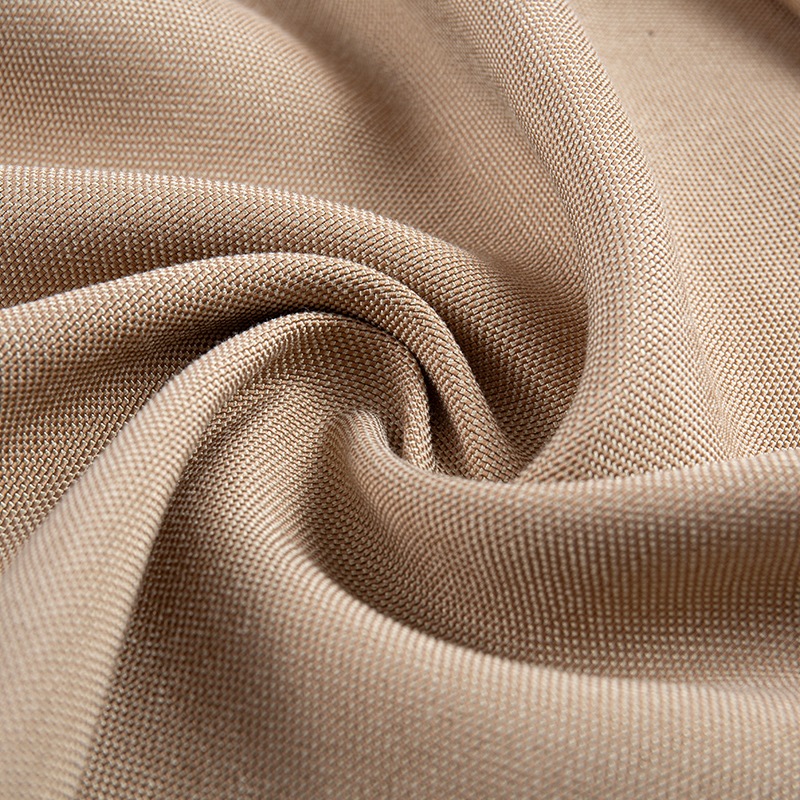
 Imitation Acetate Linen-Feel Double-Layer FabricThis 100% polyester double-layer fabric, 58 inches wide and 200 GSM, offers linen-like texture with soft acetate sheen. It suits the seasonal spring jackets, dresses, and structured summer garments mentioned as the group's natural extension.View Product →
For color-driven categories there is one more point worth noting. Acetate and cationic-dyeable imitation acetate reach very deep blacks and saturated solids with high consistency, a recurring requirement in formalwear and in robe and headscarf programs where shade depth is part of the product's identity.
Fiber selection is a trade-off exercise, so the visual below and the table set acetate beside the three fibers it is most often weighed against in apparel development meetings.
| Aspect | Acetate | Silk | Polyester | Viscose |
|---|---|---|---|---|
| Luster | Soft, silk-like | Natural and deep | Bright, slightly metallic | Low to moderate |
| Drape | Fluid and soft | Fluid | Stiffer unless microfiber | Fluid when soft twisted |
| Moisture absorption | About 6.5 percent regain | High | Very low | High |
| Heat tolerance | Low; press cool | Moderate | High | Moderate |
| Typical care | Dry cleaning preferred | Delicate hand wash | Easy machine wash | Gentle wash, may shrink |
| Relative cost | Mid | High | Low | Low to mid |
The pattern is consistent. Silk leads on every aesthetic attribute but costs several times more; polyester leads on care and durability but struggles to produce a refined, non-metallic sheen; viscose offers absorbency with comparatively little luster. Acetate occupies the middle ground. For categories where the look and the fall of the cloth decide the sale, it delivers much of the visual appeal of silk at a fraction of the cost, and the care demands are the main price. Where those care demands are unacceptable, the next section describes the modern answer.
Pure acetate will always have its place, but a large share of current development now happens in imitation acetate. These are polyester-filament fabrics engineered to imitate the flat cross section, soft luster, and smooth hand of true acetate, then finished with cationic dyeing for deep, even color. Because the base fiber is polyester, the resulting cloth tolerates machine washing, resists abrasion better, and can be built with weft stretch or four-way stretch without fragile care instructions.
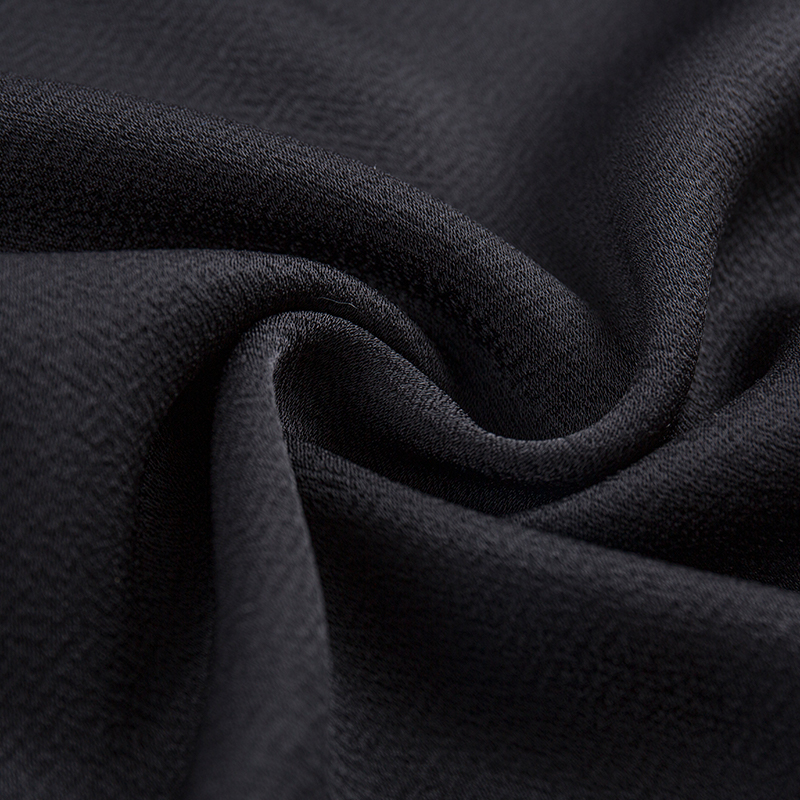
 Imitation Acetate Double-Sided Crepe FabricA 215 GSM, 58-inch polyester crepe with two wearable, subtly lustrous faces and easy machine care. It exemplifies the construction variety described, adding body, drape, and deep cationic-dyed color to dresses, trousers, and blouses.View Product →
Construction variety is the other advantage. Double-sided crepe offers two wearable faces and a fuller hand; five-end satins and horizontal stripe satins supply lustrous surfaces; double-layer builds add opacity and body without heavy weight; and linen-feel versions bring a dry, natural texture to warm-weather programs.
A practical rule of thumb follows from this. Specify true acetate where maximum luster and drape justify careful care, and specify imitation acetate where the program needs the same visual language with everyday durability and a lower total cost.
Most problems reported with acetate garments trace back to three causes: heat, water, and friction. Both care labels and factory processes should therefore be planned around those factors from the very start of a program, not negotiated after the first customer complaint.
Triacetate and imitation acetate relax most of these constraints, tolerating warmer washing and simpler pressing, which is precisely why they dominate programs aimed at daily and travel wear.
Because acetate covers a wide spread of qualities, a short checklist keeps specifications honest from first sampling through bulk delivery.
The most reliable results usually come from suppliers who co-develop with the buyer, adjusting weave density, finishing, and dye approach to the garment's real conditions of use. That collaborative model applies to cellulosic fibers generally, and this guide on how to choose the right natural fiber fabric expands the selection logic in more detail. For teams building women's collections, browsing a focused range such as acetate and imitation acetate fabric for women's clothing remains the fastest way to compare satins, crepes, and double-layer constructions side by side.
Neither, exactly. Acetate starts as natural cellulose from wood pulp or cotton linters, then undergoes chemical modification and is regenerated as a continuous filament. The industry classifies it as semi-synthetic or regenerated cellulosic, which places it closer to viscose in comfort than to fully synthetic polyester.
It can be. Acetate absorbs some moisture and feels cool against the skin, and lightweight satins and crepes work well in warm-weather dresses and blouses. Because its weak points are abrasion and care, many brands choose linen-feel imitation acetate for daily summer wear, keeping true acetate for occasion pieces.
It wrinkles relatively easily, particularly when damp, and recovers more slowly than polyester or triacetate. Pilling is rarely an issue because the yarns are smooth continuous filaments. Wear normally appears as a loss of shine in high-friction zones rather than as surface pills.
True acetate is a regenerated cellulose fiber, while imitation acetate is a polyester filament engineered to copy the luster and hand of acetate, usually dyed with cationic dyes for deep color. Imitation versions wash more easily and resist abrasion better, while pure acetate keeps a slight edge in drape and moisture comfort.
Dry cleaning is the safest route for pure acetate. If the label permits washing, use cool water and a mild detergent, handle the garment gently, and dry it away from direct heat. Press at low temperature with a press cloth, generally below 130 degrees Celsius, and never let a hot iron rest on the fabric.
Acetate is neither a miracle fiber nor a fragile relic. Used where its strengths decide the purchase, meaning luster, drape, deep color, and cost efficiency, it remains one of the most rational choices in dressy apparel. Where daily wear and easy care dominate, triacetate and imitation acetate close the gap while preserving the same visual language. The strongest programs treat the whole family as a toolkit, matching each construction to the garment's real conditions of use rather than to a single fiber name, and working with suppliers who can adjust weave, finish, and shade to the program instead of selling a fixed list.