English
 Français
 عربى
Home / News / Industry News / What Buyers Must Know Before Sourcing Acetate and Viscose Blended Fabric
Industry News

If you are building a collection that depends on fluid movement, soft luster, and a refined hand feel, an acetate and viscose blended fabric frequently solves problems that pure synthetic or pure cellulosic fabrics cannot solve alone. Buyers searching for this material are usually not casual readers. They are apparel brands, independent designers, fabric trading companies, and sourcing agents who need answers about bulk pricing, sample yardage, color consistency, and production risk.
This guide treats the material as a sourcing decision, not a textbook topic. It covers why the blend performs well in drape-heavy garments, how dyeing behavior affects lot-to-lot consistency, what technical specifications matter during purchasing, and which cost factors change your landed price. The goal is simple: help you ask better questions before you place a purchase order.
Quick orientation: Acetate contributes sheen, body, and dimensional stability. Viscose contributes softness, breathability, and fluid drape. Together they create a fabric that behaves closer to silk in appearance while remaining more attainable in price than many luxury alternatives.
The commercial appeal of this blend is not abstract. It comes from specific performance traits that matter on the cutting table and on the sales floor.
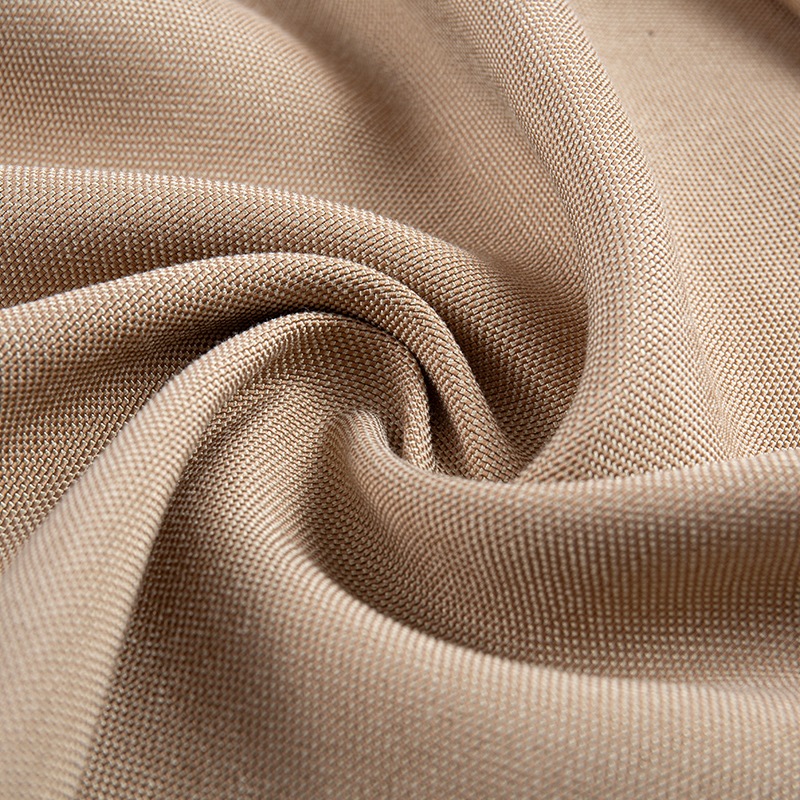
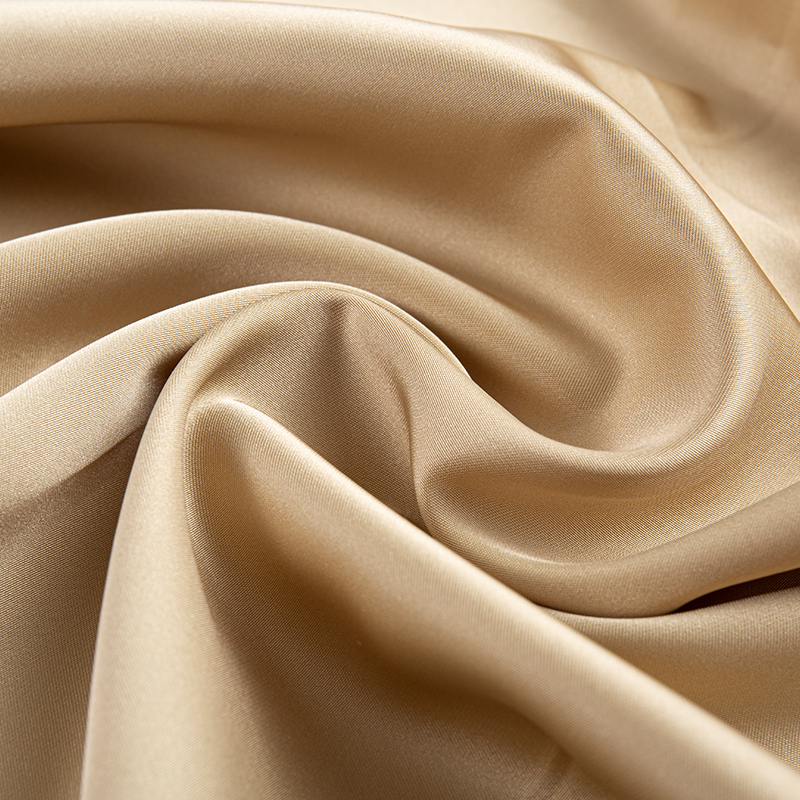
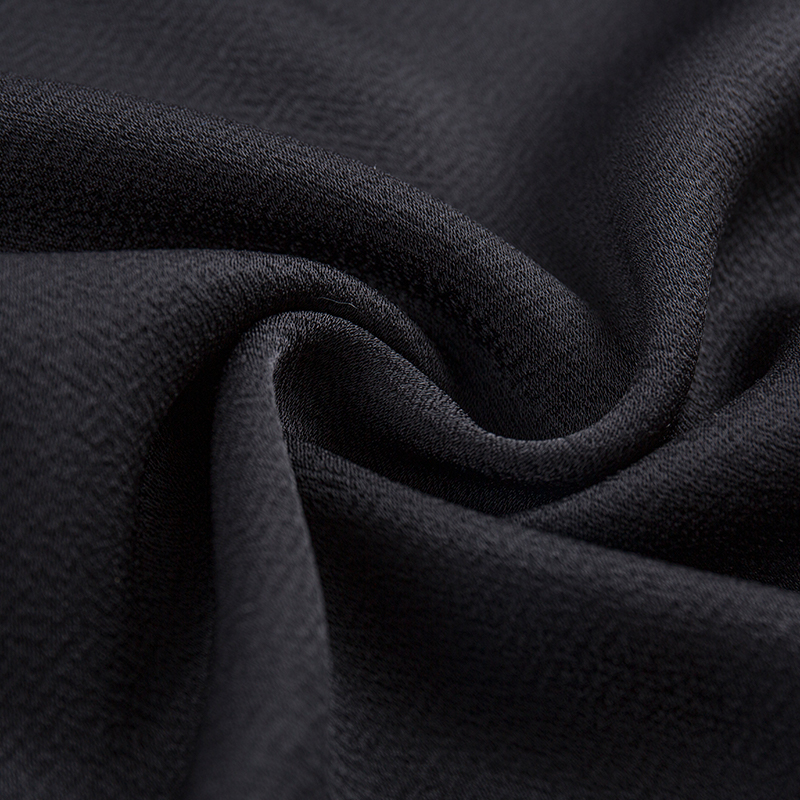
Acetate brings a smooth, almost cool touch, while viscose introduces a fuller, softer hand. The combination produces a fabric that falls in clean vertical lines rather than collapsing or standing away from the body. This is why the blend appears frequently in bias-cut slip dresses, fluid skirts, soft blazers, and draped necklines. For buyers, the practical benefit Acetate and Viscose Blended Fabricis fewer construction compromises: you can achieve a luxury silhouette without lining every panel or adding heavy interlining.
When woven in a satin or satin-backed construction, the acetate portion accepts dye deeply and reflects light with a subdued sheen. The surface looks richer than a flat plain weave, yet it does not read as aggressively shiny. This makes the fabric suitable for eveningwear, occasion dressing, and premium linings where a subtle glow improves the perceived value of the garment.
Viscose provides moisture absorption and breathability, which improves comfort compared with fully synthetic linings. Acetate adds stability and helps the fabric hold its shape after cutting and sewing. For end consumers, the result is a garment that feels comfortable against the skin and hangs consistently after wearing.
Compared with pure silk, the blend offers a similar visual language at a significantly lower material cost. Compared with polyester satin, it delivers a more natural hand and better breathability. This middle position is commercially useful: brands can offer a premium look at a mid-tier price point.
Sourcing decisions often fail not because the fabric looks wrong in a swatch, but because the bulk order behaves differently from the sample. The following technical points are where experienced buyers separate reliable suppliers from risky ones.
Union dyeing of acetate and viscose is historically challenging because the two fibers absorb dye at different rates. A supplier with mature process control can still achieve consistent shade matching across production lots. When you evaluate a potential order, ask about lab dip approval, bulk shade continuity, and how the mill handles shade variations between dye lots. A supplier that speaks openly about these controls is usually more reliable than one that promises perfect color without discussing process.
Common Composition
50/50 or 60/40 acetate/viscose
Typical Weight Range
110 to 154 GSM
Common Finishes
Plain, satin, twill, jacquard
Most commercial qualities fall between 50 percent acetate and 50 percent viscose, or 60 percent acetate and 40 percent viscose. Weight ranges vary by end use. Lightweight qualities around 110 to 130 GSM suit linings and sheer overlay. Midweight qualities around 130 to 154 GSM work well for dresses, skirts, and soft tailoring. Heavier constructions may include additional yarns or finishes, so always confirm the exact composition rather than assuming from the category name.
This is a refined fabric, and honest care guidance builds trust. Dry cleaning is the safest option for garments made from acetate and viscose blends. Very delicate hand washing is possible for some qualities, but agitation, high heat, and harsh detergents can cause shrinkage, surface dulling, or distortion. For brands, this means care labels should be clear and consumer expectations should be managed at the point of sale.
| Parameter | Typical Range | Sourcing Note |
|---|---|---|
| Composition | 50/50 to 60/40 | Confirm exact ratio before costing |
| Weight | 110 to 154 GSM | Match to end use and season |
| Width | 140 to 150 cm | Check usable width after finishing |
| Shrinkage | Low to moderate | Pre-test before bulk cutting |
| Care | Dry clean recommended | Test delicate hand wash if needed |
Price in this category is not a single number. It is the result of fiber cost, weaving complexity, finishing, origin, order quantity, and color requirements. Understanding these factors helps you compare quotes fairly instead of chasing the lowest unit price and absorbing hidden costs later.
Minimum order quantity and lead time are the two numbers that determine whether a fabric is practical for your production calendar. For custom dyeing, MOQ is often higher than for stock colors. Sample yardage may be available for evaluation, but bulk production scheduling depends on yarn availability and dyehouse capacity. Ask for a written production timeline that separates sampling, lab dip approval, bulk dyeing, finishing, and inspection.
Buyer tip: A slightly higher unit price from a supplier with stable dyeing and reliable lead times usually lowers your total cost by reducing rejects, reorders, and schedule disruptions.
Before committing to a bulk order, evaluate the hand, drape, and surface appearance in person. Request a swatch pack for the qualities that match your collection, and ask for a bulk quote based on your target composition, weight, color, and order quantity. That single step prevents most sourcing mismatches.
Yes. Viscose is a cellulosic fiber with moisture absorption properties, so the blend breathes better than a comparable 100 percent polyester lining. Acetate is less breathable than viscose, but it does not block airflow the way dense synthetic finishes can. The overall comfort level is suitable for dresses, blouses, and linings in moderate climates.
It wrinkles less than pure viscose but more than polyester. The acetate component improves recovery and dimensional stability, yet the fabric still benefits from proper hanging and storage. For travel-heavy garments, consider a blend with a higher acetate ratio or a finish designed to improve crease recovery.
Printing is possible, but the two fibers respond differently to dyes and inks. Digital printing can work well on prepared fabric, while conventional printing requires testing to ensure color yield and fastness on both fiber components. Always request a printed strike-off before bulk production.
MOQ varies by supplier, color, and construction. Stock colors may be available in lower quantities, while custom dyeing usually requires a higher minimum. Ask for both sample yardage and bulk MOQ in writing so you can plan your production budget accurately.
Dry cleaning is the safest method. If hand washing is necessary, use cool water, a mild detergent, minimal agitation, and air dry away from direct heat. Avoid wringing, high-temperature drying, and harsh chemicals, which can dull the surface or distort the fabric.