English
 Français
 عربى
Home / News / Industry News / How Much Does Acetate Fabric Cost? 2026 Price Ranges and Key Cost Drivers
Industry News

Content
Ask five suppliers what acetate fabric costs and you will probably hear five different numbers, because acetate is not a single material but a family of related fabrics. True acetate, acetate blends, and imitation acetate can look remarkably similar on a swatch card, yet their prices can differ by a factor of five or more. Knowing which tier a quotation actually refers to is the first step in reading any price list correctly.
This guide sets out what each type of acetate fabric typically costs per yard in 2026, where the money goes inside a mill quotation, and how weight, weave, color depth, and order volume move the final number. The figures below are indicative ranges for apparel-weight woven fabrics, reflecting current market conditions rather than binding offers, so treat them as budgeting benchmarks rather than fixed prices.
For apparel-weight woven fabrics sold at retail, prices cluster into three broad tiers. True acetate in satin, taffeta, and lining qualities generally runs $4 to $12 per yard. Acetate blended with viscose, polyester, or nylon lands at $2.50 to $6.50. Imitation acetate, a polyester fabric engineered to mimic the luster and hand of acetate, is the most accessible tier at $1.50 to $4 per yard. Two reference points frame the scale: triacetate, the more heat-resistant cellulose derivative, typically starts near $8 per yard, while natural silk, the look all of these fabrics chase, starts around $15 and climbs past $50 for fine qualities.
Indicative 2026 retail ranges for apparel-weight wovens; mill quotes vary with weight, construction, and volume.
Remember that these are ticket prices, not what a manufacturer pays. Ex-mill and wholesale pricing commonly runs 30 to 50 percent below retail once volumes reach production scale, and the sections below unpack where that money goes and why two apparently similar quotations can differ so widely.
The single biggest driver of acetate fabric pricing is what the fabric is actually made of. Three material routes dominate the market, and each carries a distinct cost structure.
True acetate is a regenerated cellulose filament made from purified wood pulp. The fiber is formed through a precision wet-spinning process, and production capacity is concentrated among a relatively small number of specialist producers, which keeps raw material costs high and supply comparatively inelastic. In return, the fabric offers a liquid drape, a soft luster that takes deep dye shades beautifully, and a cool, silky hand that polyester still struggles to copy exactly. Expect roughly $4 to $12 per yard at retail, with luxury taffetas and specialty qualities climbing higher. True acetate also carries a hidden lifetime cost: it is sensitive to heat and rubbing, so most garments specify dry cleaning or very gentle care.
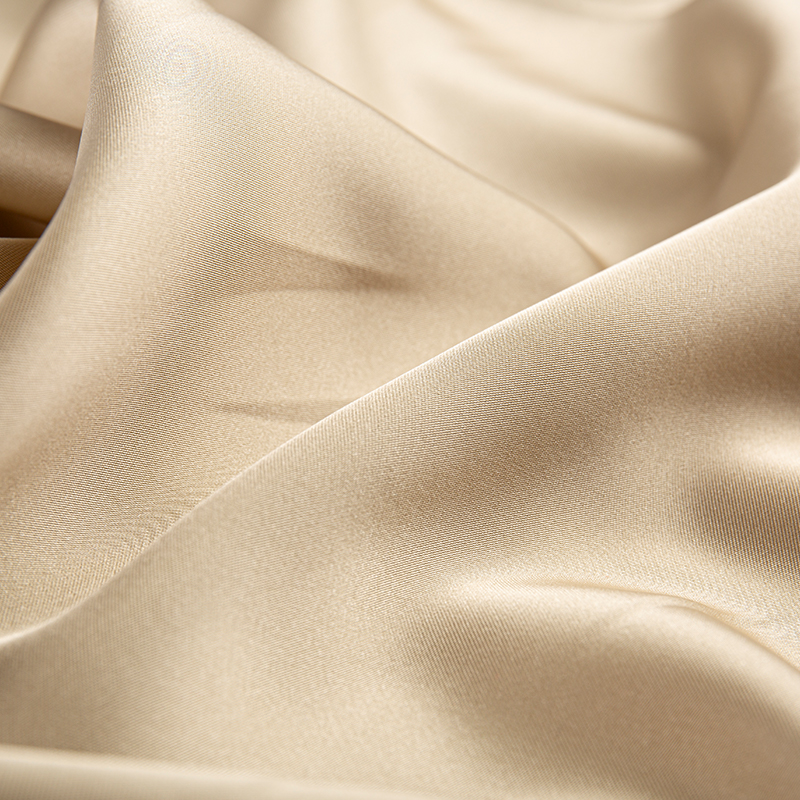 Acetate Satin Fabric (Item No.2765)This 61% acetate, 39% polyester satin offers a silk-like luster and fluid drape at 220 GSM, showing how acetate blends balance sheen, drape, and durability for mid-market women's apparel.View Product →
Blending acetate with viscose, polyester, or nylon trims material cost while preserving much of the drape and sheen that make acetate desirable. Blends also improve wrinkle recovery and abrasion resistance, which reduces complaints on everyday garments. Typical blends run $2.50 to $6.50 per yard, placing them within reach of mid-market collections that want the acetate story without the top-tier price.
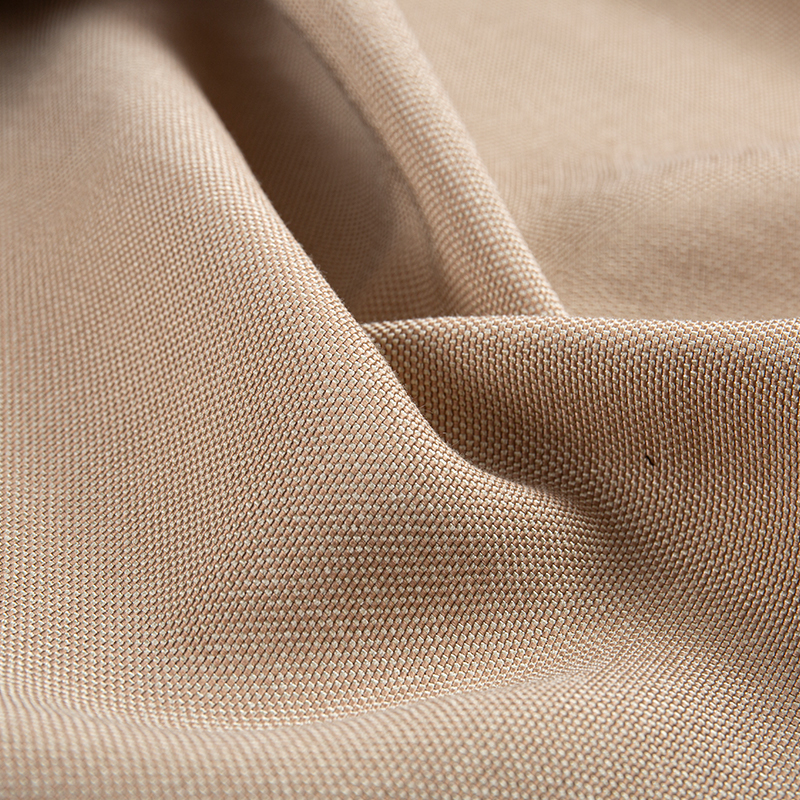 Acetate and Viscose Blended Fabric (AcRN No.2708)A 42% acetate, 52% rayon, 6% nylon blend at 295 GSM, this second-twist fabric adds body and wrinkle resistance to acetate's drape, fitting mid-market collections seeking quality at moderate cost.View Product →
Imitation acetate is a polyester fabric engineered to reproduce the luster, smooth hand, and fluid fall of acetate. Modern cationic dyeable polyester accepts deep, level shades at low cost, and the finished cloth washes and wears far more forgivingly than true acetate. That is why so many satin-finish dresses, blouses, and linings at accessible price points are labeled acetate-look rather than acetate. At $1.50 to $4 per yard, it often costs about half of true acetate at retail and far less in bulk. For a closer look at how these fiber families differ in touch and performance, this overview of natural fiber fabrics such as acetate and lyocell is a useful starting point.
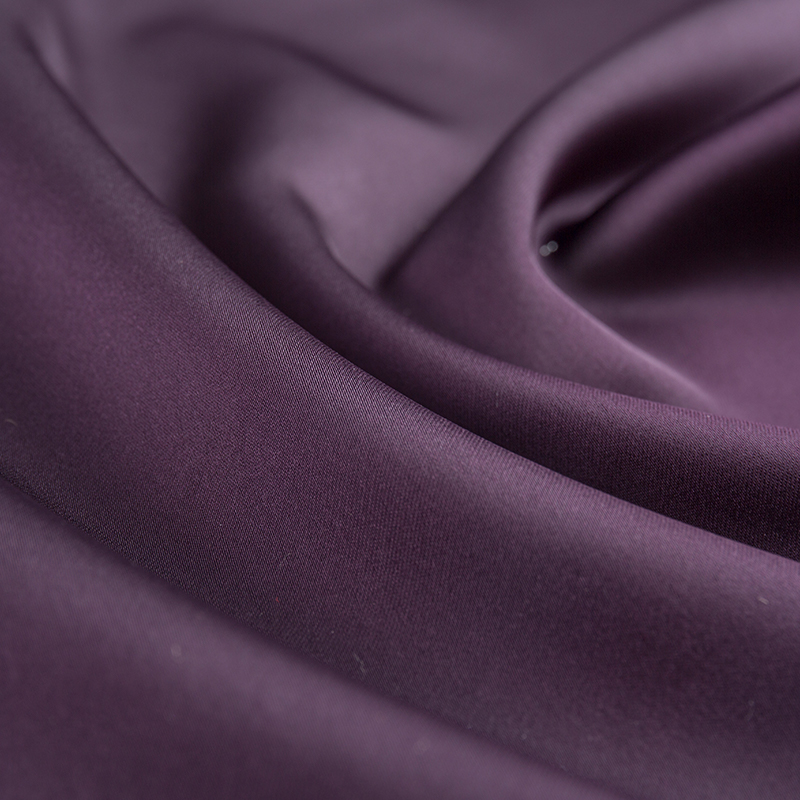 Imitation Acetate Five-End Satin FabricMade of 100% polyester at 135 GSM, this five-end satin reproduces acetate's matte sheen and drape with easier care and lower cost, ideal for accessible acetate-look garments and linings.View Product →
Once the fiber route is fixed, seven variables explain most of the remaining spread between quotations. Use them as a checklist whenever a price looks unusually high or too good to be true.
Illustrative cost shares for woven filament fabrics; actual structures shift with yarn markets and finishing depth.
When comparing two quotations, normalize them first: divide the price by the fabric weight and check the finished width, because a wider or heavier cloth can justify a higher number per meter while still costing less per finished garment.
Price only means something next to performance. The table below summarizes how the four common silk-look options compare on the attributes buyers weigh most often when balancing cost against quality.
| Attribute | True Acetate | Acetate-Viscose Blend | Imitation Acetate | Silk |
|---|---|---|---|---|
| Retail price per yard | $4 - $12 | $2.50 - $6.50 | $1.50 - $4 | $15 - $50+ |
| Hand and luster | Silky, fluid | Soft, slightly crisper | Silk-like, a touch drier | Natural, refined |
| Breathability | Good | Good to moderate | Moderate | Excellent |
| Wrinkle recovery | Low to moderate | Moderate | Moderate to high | Good |
| Care | Dry clean preferred | Gentle wash possible | Easy machine wash | Dry clean or hand wash |
| Best suited for | Drapey dresses, premium linings | Skirts, shirts, sets | Everyday satin looks, linings | Occasionwear, luxury pieces |
Read the table with cost per wear in mind rather than price alone. An imitation acetate dress that survives dozens of machine washes can be cheaper over its life than a delicate true acetate piece worn twice, while a true acetate lining in a tailored jacket may quietly outlast the jacket itself. Matching the material to the garment's actual job is where the real savings sit, and it is also why experienced buyers rarely choose a tier on price alone.
Retail tags hide most of the pricing mechanics. Fabric is normally quoted ex-mill per meter, which excludes freight, duties, and financing, so a $2.00 per meter quotation and a $2.60 per meter quotation can converge once delivery terms are equalized. Always confirm whether a quote is ex-mill, FOB, or delivered before comparing suppliers, and make sure both sides are pricing the same finished specification rather than one greige and one dyed cloth.
Order quantity reshapes the number more than anything else. Sample lengths are commonly invoiced at two to three times the bulk rate because dyeing and finishing setup costs are spread over a few dozen meters instead of thousands. As volume climbs, mills step the price down at breakpoints, so an imitation acetate satin quoted at $2.20 per meter for a 3,000 meter program might move toward $1.80 per meter at 10,000 meters. Those figures are illustrative, but the shape of the curve is not: the first price break is always the biggest one.
Before accepting any quotation, run it through a short checklist:
Buyers who consolidate colors, book capacity early, and keep specifications standardized routinely secure better tiers than those who chase the lowest headline number from quote to quote.
Smart sourcing is less about finding one cheap fabric and more about assigning each garment the right tier. A few tactics consistently reduce cost without sacrificing the shelf appeal that makes acetate-style fabrics sell:
Because the acetate category spans so many constructions, from mesh and pin stripes to linen-feel double layers, it pays to review a focused range side by side. Browsing a dedicated acetate and imitation acetate fabric collection makes it easier to match constructions to your price targets before committing to sampling budgets.
Most apparel-weight acetate fabrics retail between $1.50 and $12 per yard. True acetate sits at roughly $4 to $12, acetate blends at $2.50 to $6.50, and imitation acetate at $1.50 to $4, with specialty constructions priced above these bands.
Yes. At retail it often costs around half as much, and the gap widens at wholesale volumes because polyester filament is cheaper to produce and far more widely available than acetate filament.
The fiber starts as purified wood pulp and passes through a precision wet-spinning process with limited global capacity. Polyester is made at enormous scale from lower-cost inputs, which is why a polyester cloth can sell for a third of a comparable acetate quality.
Almost always. Sample lengths carry setup costs at two to three times the bulk rate, and mills step prices down as volume passes through breakpoints, with the largest saving landing at the first full production run.
Deep shades such as black, navy, and coffee consume more dye, need longer dye cycles, and are less forgiving of unevenness. Light and medium shades are quicker and cheaper to run for most fiber routes.
When a design depends on drape and luster, yes. True acetate earns its premium on hero pieces, while imitation acetate delivers much of the same look for everyday styles, so the worthwhile choice depends on the garment's role and expected wear life.