English
 Français
 عربى
عربى Home / News / Industry News / A Complete Guide to Polyester-Rayon Blend (TR) Fabric for Formal Apparel
Industry News

Content
After analyzing performance metrics across durability, wrinkle recovery, drape, and cost-efficiency, the polyester-rayon blend (TR) formal wear fabric—particularly the 65% polyester / 35% rayon ratio—emerges as the most balanced and practical material for modern business suits, professional uniforms, and travel-ready formal wear. It delivers near-wool aesthetics with superior crease resistance and 3× higher abrasion resistance, while requiring far less maintenance. For professionals who wear suits five days a week, TR fabric offers the best lifetime value—retaining its crisp silhouette through countless wears and washes without the dry-cleaning bills of pure wool.
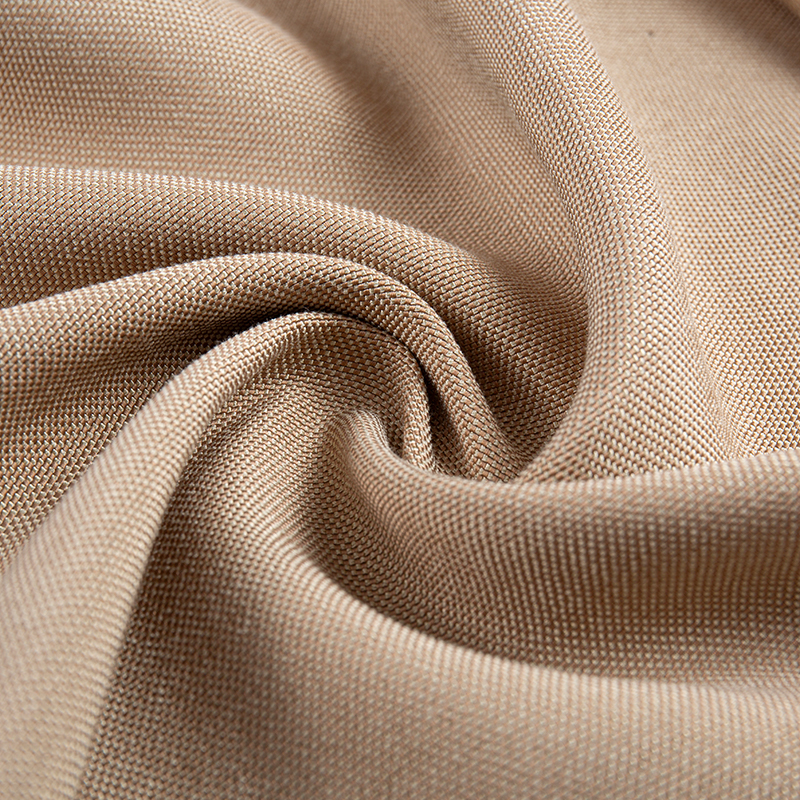
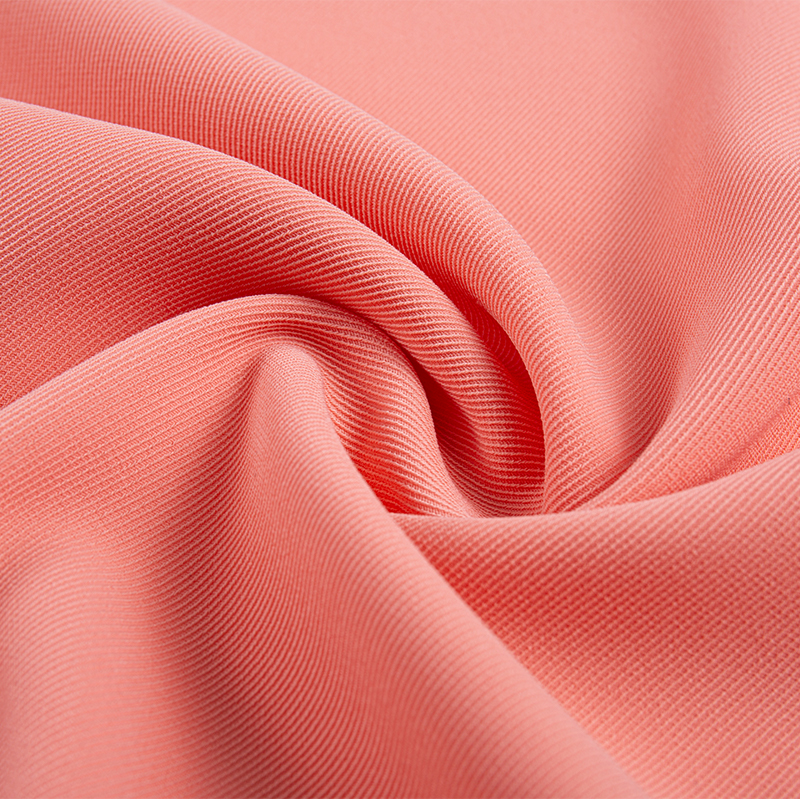
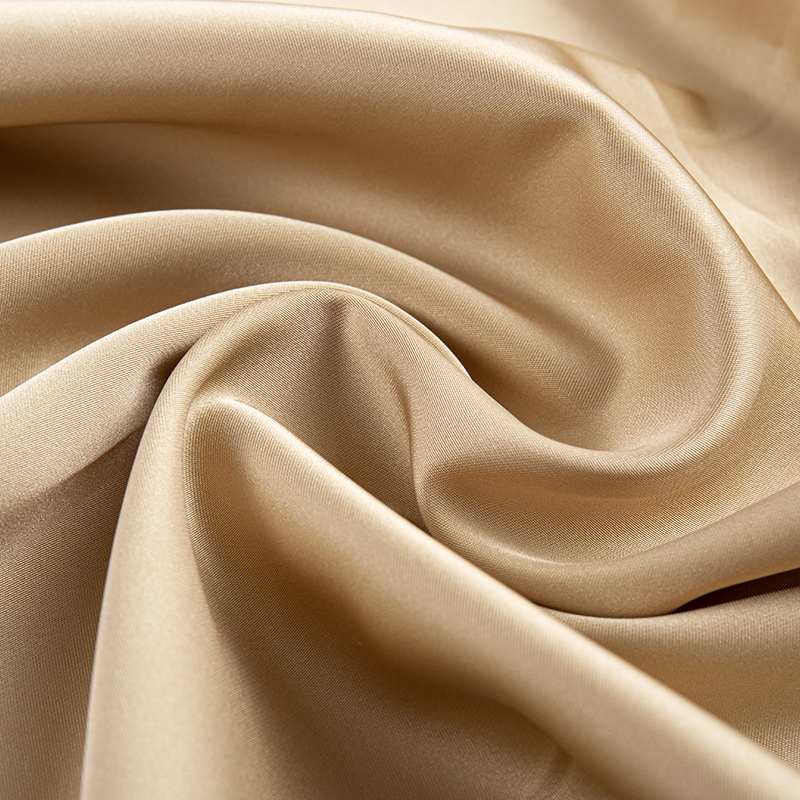
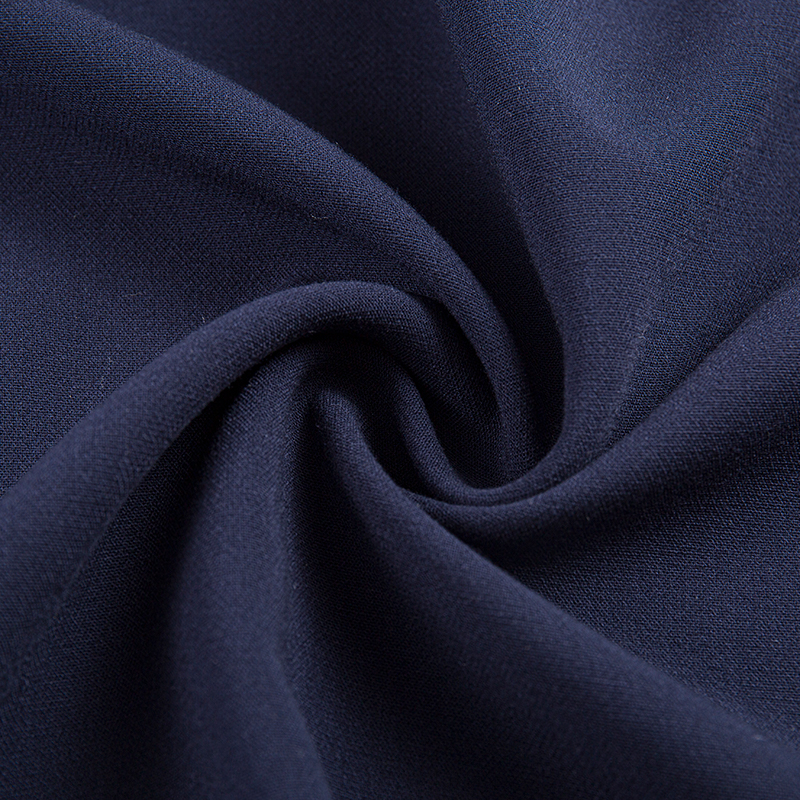
TR stands for Terylene (polyester) and Rayon (viscose). This engineered blend combines the structural strength of synthetic fibres with the natural comfort of regenerated cellulose. Polyester provides the backbone—wrinkle resistance, dimensional stability, and tensile strength—while rayon imparts softness, moisture absorption, and a fluid drape that mimics wool.
In blind touch tests, 65/35 TR fabric is frequently mistaken for entry-level pure wool—a testament to how viscose elevates the hand-feel. The blend's density (around 1.5 g/cm³) gives it a natural weight that hangs cleanly without ballooning.
Polyester's elastic recovery ensures that TR fabric sheds creases within 30 minutes of hanging after a full workday. Compared to pure cotton (recovery rate ~40%) and pure wool (~60%), TR achieves over 85% recovery in standard testing (ASTM D1296). This means no morning ironing—just hang and go.
Polyester fibres have a tenacity of 4.5–5.5 cN/dtex versus wool's 1.0–1.7 cN/dtex. In Martindale abrasion tests, TR fabrics withstand over 50,000 rubs before showing wear, compared to ~20,000 for wool. This translates to suits that look new after years of daily use.
Rayon's fluidity gives TR fabric a soft, natural fall. Trousers maintain a sharp crease and resist knee bagging. In visual evaluations, TR suits score 8.5/10 for drape—just behind premium wool's 9.5, but far ahead of pure polyester (5/10) or cotton blends (6/10).
Rayon absorbs up to 12–14% moisture (vs. polyester's <1%), reducing clamminess. While not as breathable as wool, TR fabrics wick sweat effectively and dry quickly, making them more comfortable than 100% synthetics in warm offices.
Most TR suits are machine washable at 30°C—a game-changer for busy professionals. They resist shrinking and need only a light steam. Compared to wool's mandatory dry-cleaning (costing ~$15 per visit), TR saves over $200 annually in maintenance costs.
Choosing between TR and wool depends on priorities. Here is a data-driven comparison (10-point scale):
Key takeaway: If you value low maintenance, durability, and cost-efficiency for daily wear, TR wins. If breathability and the luxury hand-feel of premium wool are non-negotiable, choose wool—but expect higher upkeep.
TR fabric's versatility makes it a staple across multiple formal categories:
According to industry sourcing data, TR fabrics account for over 45% of all mid-range suiting produced globally—a clear indicator of its market dominance.
TR fabric comes in four weight classes, each suited for different climates:
For a typical office environment (22–24°C), the regular weight (200–240 GSM) offers the best all-round performance.
While TR excels in many areas, be aware of these trade-offs:
These limitations are manageable with proper care and realistic expectations.
Use cold water (30°C) and a gentle cycle. Choose neutral liquid detergent—avoid bleach and fabric softeners, which can damage rayon fibres. Turn garments inside out to reduce surface friction.
Hang to dry in a shaded, ventilated area. Direct sunlight can cause fading and a "mirror" effect on dark colours. Never tumble-dry high heat.
Set iron to synthetic setting (110–150°C) and always use a pressing cloth. Steam is preferred over dry ironing to relax wrinkles without flattening the weave.
Use wide-shouldered hangers to preserve the jacket shape. Store in a breathable garment bag to protect from dust while allowing moisture escape.
Use this corrected decision flowchart to match your specific needs with the right TR variant. The logic now properly branches from Primary Use to either Durability-First (80/20) or Aesthetics-First, then further refines the aesthetic branch with a Stretch/Slim Fit decision point.
TR is an abbreviation for Terylene (polyester) and Rayon (viscose). It denotes a blended fabric that combines the strengths of both fibres.
The 65/35 polyester/rayon ratio is universally recommended—it provides the best balance of wrinkle resistance, softness, and drape, closely mimicking wool.
Yes, most TR suits are machine washable at 30°C on a gentle cycle. Always check the care label, and avoid hot water or high-speed spins.
TR has moderate breathability—better than pure polyester but not as airy as wool or linen. It is comfortable for typical office environments but may feel warm in hot, humid conditions without air conditioning.
TR is significantly more affordable—typically 1/3 to 1/5 the price of comparable wool suiting, while offering superior durability and easier care.
Pilling can occur, especially with lower-quality yarns. Choosing high-twist, compact-spun TR fabrics and washing inside out reduces pilling significantly.
Lightweight TR (140–180 GSM) is ideal for summer—it drapes well and wicks moisture, though it does not match linen's breathability. For extreme heat, consider blend with linen or cotton.